If you run a small business in India and need funding but don’t have property to pledge, the CGTMSE scheme is likely your best path to a bank loan. This guide breaks down everything you need to know about obtaining a loan without collateral through the Credit Guarantee Fund Trust for Micro and Small Enterprises – from eligibility and documentation to approval strategies and real-world case studies.
1. Introduction: Quick Answer – How to Get a Loan Without Collateral via CGTMSE
A loan without collateral – also called a collateral free business loan – is a credit facility where the borrower does not need to pledge property, fixed deposits, or any other asset as security. Under the CGTMSE scheme, the Trust provides a credit guarantee to the bank, absorbing a significant portion of the default risk so that the lender can sanction collateral free loans to eligible MSMEs and startups.
Unsecured business loans allow entrepreneurs to fund their needs without assets. Government schemes in India offer collateral-free loans for entrepreneurs, and CGTMSE is the most prominent among them. Collateral-free loans can be secured up to ₹5 crore under the standard scheme, with recent circulars extending guarantee coverage up to ₹10 crore under CGS-I for banks.
Here’s what typically qualifies:
- Loan ticket sizes: ₹10 lakh to ₹5 crore (up to ₹10 crore under CGS-I with hybrid security)
- Sectors: Manufacturing, services, trading (with conditions)
- Credit facilities: Term loans, working capital (cash credit, overdraft), and composite loans
- Special categories: Women entrepreneurs, SC/ST, North-East units, ZED-certified enterprises
A well-prepared project report, CMA data, and financial projections significantly improve your approval chances. Platforms like ProjectReportBank.com specialize in preparing these documents for CGTMSE proposals.
This article is updated for 2026 and covers the latest limits, eligibility criteria, and guarantee coverage.
If you need a loan without collateral, you must:
- Have valid Udyam Registration
- Maintain clean bank account conduct with no cheque bounces
- Prepare complete documents (financials, CMA, projections)
- Submit a viable, detailed project report
- Approach a bank that is an active Member Lending Institution under CGTMSE
Table of Contents
2. What Is CGTMSE and Why It Matters for Collateral Free Business Loans
CGTMSE stands for Credit Guarantee Fund Trust for Micro and Small Enterprises. It was established in August 2000 by the Ministry of MSME and the Small Industries Development Bank (SIDBI), Government of India, to improve credit access for small enterprises.
The CGTMSE scheme was launched in 2000 by the Government of India. It does not lend money directly. Instead, it provides a guarantee cover to member lending institutions – public sector banks, private banks, regional rural banks, small finance banks, and select NBFCs – so they face reduced risk when extending collateral free credit to micro and small enterprises.
The scheme has evolved significantly:
- Initial guarantee ceiling: ₹25 lakh
- Increased to ₹1 crore, then ₹2 crore
- Raised to ₹5 crore from 1 April 2023
- Further increased to ₹10 crore under CGS-I via Circular No. 250/2024-25 (with hybrid security model for higher slabs)
Loans can be sanctioned to Micro and Small Enterprises (MSEs). Eligible MSEs can avail loans without collateral under CGTMSE, making it essential for first-generation entrepreneurs, women-led businesses, and small manufacturers who cannot provide property as collateral security.
Key facts about CGTMSE in 2026:
- Guarantee ceiling: ₹10 crore (CGS-I for banks)
- Fee concessions for special categories
- Guarantee percentage: 75%–90% depending on category and loan amount
- Active across 100+ member lending institutions nationwide

3. How a CGTMSE Loan Without Collateral Works (Credit Guarantee Mechanism)
The credit guarantee concept works like this: the bank gives you the loan without requiring collateral. If you default after due legal recovery efforts, the bank files a claim with CGTMSE. The Trust then reimburses a pre-agreed percentage of the outstanding amount to the lending institution.
You, the borrower, remain fully liable to repay the loan. CGTMSE protection is for the lender only – it is not a loan waiver or subsidy.
Common types of unsecured loans include personal loans and credit cards. Personal lines of credit allow borrowing up to a limit without collateral. But CGTMSE-backed business loans are specifically designed for MSMEs, offering higher amounts and structured repayment.
Banks still perform detailed appraisal – financial, technical, and market feasibility – just as they would for secured loans. The guarantee does not replace due diligence.
| Parameter | Normal Secured Business Loan | CGTMSE Collateral Free Business Loan |
|---|---|---|
| Collateral required | Property, FD, machinery | None (project assets as primary security) |
| Loan amount | No fixed cap (depends on collateral value) | Up to ₹5 crore (₹10 crore under CGS-I) |
| Risk to bank | Low (backed by assets) | Moderate (partially covered by CGTMSE guarantee) |
| Processing approach | Collateral valuation + appraisal | Project viability + cash flow appraisal |
| Typical use cases | Large projects, real estate-backed | MSMEs, startups, first-time entrepreneurs |
4. Key Features of CGTMSE Collateral Free Business Loans (Updated for 2026)
Unsecured loans typically have higher interest rates than secured loans, but under CGTMSE, the guarantee cover keeps rates competitive for MSMEs with strong financials.
Feature snapshot:
- No collateral requirement up to eligible limit
- Both term loans and working capital credit facilities covered
- Composite loans (term + working capital in one package) permitted
- New and existing MSMEs eligible, including manufacturing, services, and specified trading activities with Udyam Registration
- Special categories receive higher guarantee cover and concessional guarantee fees: women entrepreneurs, SC/ST, aspirational districts, NER, ZED-certified units
- Typical loan tenures: 3–7 years for term loans (up to 10 years for large manufacturing), one-year renewable limits for working capital
- Interest rates generally linked to MCLR or EBLR with risk premium – not as cheap as highly secured loans but attractive interest rates for the MSME segment
- Flexible repayment options based on project cash flow and gestation period
The scheme plays a central role in enabling financial support for businesses that would otherwise be excluded from institutional finance.
5. Benefits of CGTMSE Loan Without Collateral for MSMEs & Startups
- No property mortgage required – your home, land, or family assets stay untouched
- No third party guarantee needed from relatives or friends
- Easier access to institutional finance for first-time entrepreneurs and sole proprietors
- Preserves personal assets while enabling business expansion, technology upgradation, and working capital support
- Supports broader economic outcomes: employment generation, formalization of small businesses, GST registration
Practical examples:
- A ₹50 lakh machinery finance term loan for a small engineering unit – fully collateral free
- A ₹1.5 crore composite loan for a food processing startup covering equipment and raw material
- A ₹75 lakh cash-credit facility for a trading business to manage seasonal inventory
Failure to repay an unsecured loan can damage your credit score. But when managed well, collateral free loans combined with good cash flow management help build strong credit history, opening doors to larger secured facilities in the future.
Entrepreneurs can focus on growth instead of worrying about pledging a family-owned house.
6. Eligibility Criteria for CGTMSE Loan Without Collateral
Approval for unsecured loans is based on creditworthiness and income. Unsecured loans require a higher credit score for approval compared to secured alternatives.
Eligible entities:
- Sole proprietors, partnership firms, LLPs, private limited companies, OPCs
- Trusts/societies engaged in manufacturing or service activities
- Specified traders as allowed under latest scheme guidelines
MSME classification (as per MSMED Act and Udyam Registration):
- Micro: Investment ≤ ₹1 crore, Turnover ≤ ₹5 crore
- Small: Investment ≤ ₹10 crore, Turnover ≤ ₹50 crore
- Medium enterprises may be eligible under certain sub-schemes
Udyam Registration is mandatory for obtaining guarantee cover. Without it, there is no eligibility under CGTMSE.
Basic Eligibility Checklist:
- ✅ Valid Udyam Registration Certificate
- ✅ GST registration (where applicable)
- ✅ KYC compliance (PAN, Aadhaar, address proof)
- ✅ No wilful default or existing NPA
- ✅ CIBIL score 650+ (many banks prefer 700+)
- ✅ Business must be viable with clear project plan
- ✅ Promoter contribution (margin money) typically 15–25%
Both new (greenfield) and existing units qualify. Lenders may have additional criteria beyond CGTMSE guidelines – always confirm with your chosen bank.
7. Maximum Loan Amount and Types of Credit Facilities under CGTMSE
Eligible borrowers can apply for loans up to ₹5 crore under the standard Credit Guarantee Scheme. Under CGS-I, coverage extends to ₹10 crore with a hybrid security model for the portion above ₹5 crore.
Types of credit facilities:
- Term loans: Machinery, factory building, equipment, vehicles
- Working capital: Cash credit, overdraft, working capital term loans
- Composite loans: Term + working capital under one CGTMSE cover
Indicative loan amount ranges:
- ₹10–50 lakh for micro units and traders
- ₹50 lakh–₹2 crore for manufacturing expansion
- Up to ₹5 crore for established MSMEs with strong financials
Numeric examples:
- Example 1: ₹80 lakh term loan + ₹20 lakh cash credit = ₹1 crore composite facility
- Example 2: ₹2 crore term loan for factory setup + ₹50 lakh working capital
- Example 3: ₹35 lakh term loan for a service startup (software development)
The exact sanction depends on project cost, margin contribution, and projected cash flow – not just the maximum scheme limit.

8. CGTMSE Guarantee Coverage & Risk Sharing Explained
The guarantee coverage percentage is the portion of the defaulted outstanding amount that CGTMSE pays to the financial institution after the claim process.
The maximum guarantee cover is 75% of the loan amount for standard categories. CGTMSE provides guarantees covering up to 75% of the loan amount, with higher percentages (up to 85–90%) for special categories.
| Loan Slab | Standard Coverage | Women / SC/ST / NER / ZED |
|---|---|---|
| Up to ₹5 lakh | 85% | Up to 90% |
| ₹5 lakh – ₹50 lakh | 75–80% | 80–85% |
| ₹50 lakh – ₹2 crore | 75% | 80% |
| ₹2 crore – ₹5 crore | 75% | 75–80% |
Note: Exact percentages should be verified against current CGTMSE circulars.
Worked example: If an MSME takes a ₹1 crore loan with 75% coverage and the outstanding in default is ₹80 lakh after recoveries, CGTMSE may pay ₹60 lakh to the bank. For an eligible woman entrepreneur with 85% coverage, the payout would be ₹68 lakh.
Key points borrowers should know:
- Guarantee becomes effective after the bank pays the annual guarantee fee to CGTMSE
- Claims can be filed only after the account becomes NPA and after recovery efforts per scheme rules
- Guarantee does not cover penal interest, irregular charges, or amounts beyond eligible principal and interest
- The borrower continues to hold full legal obligation for repayment
9. Industries & Business Types That Benefit the Most
Loans under CGTMSE support various sectors including manufacturing and services. The scheme supports various sectors including manufacturing and services, along with permitted trading activities.
Key sectors:
- Manufacturing: Engineering workshops, fabrication, plastics, packaging, food processing, textiles, garments, printing, chemicals, pharmaceuticals
- Agro-based: Rice mills, cold storage, flour mills, spice processing
- Services: IT/software, digital marketing, consulting, healthcare clinics, repair & maintenance, training institutes
- Trading: Wholesale and retail (where permitted by MLI and scheme norms)
Why manufacturing units benefit most: High machinery cost with predictable cash flow and tangible project assets as primary security.
Micro case examples:
- Small cold storage unit in Assam (₹80 lakh term loan)
- Injection moulding unit in Pune (₹1.5 crore composite credit)
- Women-led garment unit in an aspirational district (₹40 lakh with enhanced coverage)
- Digital marketing agency in a Tier-II city (₹25 lakh term loan)

10. Documents Required for CGTMSE Loan Without Collateral
Documentation for collateral free loans mirrors secured MSME loans – minus the property paperwork. You will need the following documents:
Complete checklist:
- KYC: PAN, Aadhaar, passport-size photos, address proof of all promoters
- Business registration: Udyam certificate, partnership deed / MOA-AOA / LLP incorporation
- GST registration certificate
- Last 2–3 years audited balance sheet and P&L (existing units)
- Projected financial statements (new units)
- Bank statements: last 6–12 months
- Income tax returns (promoters and business)
- Net worth statement of promoters
- Detailed project report (DPR)
- CMA data
- Machinery quotations, vendor agreements
- Sector-specific licenses (FSSAI, pollution NOC, factory license, etc.)
| Document Category | Specific Document | Purpose |
|---|---|---|
| KYC | PAN, Aadhaar, address proof | Identity verification |
| Business registration | Udyam, GST, MOA/AOA | MSME classification, legal status |
| Financial | Balance sheet, P&L, ITR | Financial health assessment |
| Project viability | DPR, CMA data | Cash flow and repayment capacity |
| Technical | Machinery quotations, layout | Cost validation |
A detailed and bankable project report and CMA data are mandatory for most banks when the loan amount exceeds ₹25–50 lakh. Minimal documentation may work for very small ticket sizes, but larger proposals demand thoroughness.
11. Project Report for CGTMSE Loan: Structure, Content & Common Mistakes
When there is no collateral, the bank’s comfort comes entirely from the project’s viability and projected cash flow. That is why banks insist on a Detailed Project Report (DPR) for collateral free business loans.
Essential sections of a CGTMSE project report:
- Promoter profile and experience
- Business model and value proposition
- Market analysis: demand-supply, competition, target customers
- Technical details: machinery specifications, capacity, process flow, plant layout
- Implementation schedule with milestone dates
- Project cost and means of finance (equity + debt)
- Financial projections: 5–7 year P&L, balance sheet, cash flow
- Break-even analysis
- DSCR calculation
- Sensitivity analysis (best case, worst case, base case)
- Risk mitigation strategies
DSCR example: If projected net cash flow is ₹30 lakh per year and annual debt obligations are ₹20 lakh, DSCR = 1.5. Banks typically require DSCR ≥ 1.25–1.4. A DSCR of 1.1 would raise red flags and likely result in queries or rejection.
Common mistakes to avoid:
- Copy-paste generic reports not tailored to your business
- Unrealistic growth assumptions (40–50% year-on-year from day one)
- Mismatch between project cost and actual machinery quotations
- Ignoring seasonality in revenue projections
- Missing licenses or environmental clearances
- Not showing adequate promoter contribution
ProjectReportBank.com specializes in professionally prepared DPRs tailored to CGTMSE requirements for manufacturing, services, and startup projects.
12. CMA Data for CGTMSE Loan: What Banks Expect
CMA (Credit Monitoring Arrangement) data is a standardized format banks use to assess working capital needs, repayment capacity, and overall financial stability.
Components of CMA data:
- Past 2–3 years financial statements
- Projected P&L and balance sheet (3–5 years)
- Fund flow / cash flow statement
- MPBF (Maximum Permissible Bank Finance) computation
- Working capital cycle analysis
- Key ratios: DSCR, current ratio, debt-equity, interest coverage, turnover ratios
Illustrative example: A manufacturing MSME seeking ₹1.5 crore term loan and ₹50 lakh cash credit must demonstrate that projected turnover of ₹3.5 crore at 15% net margin generates ₹52.5 lakh annual profit – sufficient to cover ₹38 lakh annual EMI plus working capital interest obligations. This is how accurate CMA data converts a borderline case into an approvable proposal.
Common issues: Incorrect opening balances, projections that don’t match the DPR, unrealistic inventory assumptions, and missing ratio computations.
ProjectReportBank.com prepares banker-friendly CMA reports aligned with leading PSU and private bank formats.
13. Step-by-Step CGTMSE Loan Application Process (Flow for 2026)
The loan application process is simple and straightforward when you are prepared. Here is the step-by-step flow:
Idea → Udyam Registration → Prepare DPR & CMA → Select Bank → Initial Discussion → Submit Application → Bank Appraisal → Sanction → CGTMSE Guarantee Registration → Documentation → Disbursement
- Business planning: Finalize your business idea, project cost, and funding requirement
- Udyam Registration: Register on the Udyam portal – mandatory for CGTMSE eligibility
- Prepare DPR and CMA: Get a professional project report and CMA data ready
- Select the right bank: Choose an MLI with active CGTMSE participation and MSME experience
- Initial discussion: Meet the branch manager, explain your project, share preliminary documents
- Submit loan application: File the complete application with all supporting documents
- Bank appraisal: Bank conducts financial, technical, and market analysis
- Sanction: If approved, bank issues sanction letter with terms
- CGTMSE registration: Bank applies online for guarantee cover (borrower does not apply directly to CGTMSE)
- Documentation and disbursement: Execute loan documents, funds disbursed to your bank account
Typical timelines: 2–4 weeks for loans under ₹50 lakh; 4–8 weeks for larger manufacturing projects.
Ready-to-apply checklist: Completed application form, DPR, CMA, KYC, bank statements, quotations, licenses, projected balance sheet, promoter net worth statement.
14. How Banks Evaluate CGTMSE Loan Applications (Inside Banker’s Mind)
Even without collateral security, banks follow strict appraisal norms under RBI guidelines and internal credit policies.
Main evaluation parameters:
- Promoter’s background, industry experience, and educational qualifications
- Business model viability and industry risk assessment
- Market demand and competitive positioning
- Repayment capacity based on projected cash flow
- Credit bureau scores (CIBIL, Equifax) and existing loan obligations
- Banking behaviour: regularity of transactions, minimum balance maintenance
Financial ratios lenders monitor:
- DSCR (must exceed 1.25–1.5)
- Current ratio (ideally above 1.33)
- Debt-equity ratio
- Gross and net profit margins
- Interest coverage ratio
From the banker’s desk – practical tips:
- Avoid frequent unexplained cash withdrawals
- Don’t route personal transactions through your business bank account
- Maintain minimum balance consistently
- Pay EMIs of existing loans on time – every single month
- Disclose all existing liabilities transparently
Hiding liabilities or disputes can lead to immediate rejection, regardless of how strong your project looks on paper.
15. Common Reasons for CGTMSE Loan Rejection and How to Fix Them
| Reason for Rejection | Impact on Application | Practical Solution |
|---|---|---|
| Weak project report | Bank cannot assess viability | Get professionally prepared DPR |
| Unrealistic projections | Credibility questioned | Use conservative, evidence-based estimates |
| Low CIBIL score (below 650) | Auto-rejection at many banks | Clear outstanding dues, maintain discipline for 6 months |
| Incomplete documents | Processing delayed or rejected | Use document checklist before submission |
| Insufficient promoter margin | Shows low commitment | Arrange 20–25% margin from own funds |
| Poor banking conduct | Red flag for credit team | Avoid cheque bounces, maintain regular transactions |
| High industry risk | Sector-specific caution | Choose banks with experience in your industry |
| Missing licenses | Regulatory non-compliance | Obtain all required approvals before applying |
Before re-applying after rejection:
- ✅ Check and improve your credit bureau report
- ✅ Clear minor overdues and regularize tax filings
- ✅ Revise DPR and CMA to fix inconsistencies
- ✅ Increase promoter contribution if possible
- ✅ Approach a different bank with CGTMSE experience in your sector
16. Fees, Charges & Cost of Collateral Free CGTMSE Loans
The costs of a CGTMSE loan include interest, processing fees, and the annual guarantee fee paid by the bank to the Trust (often passed on to the borrower).
| Fee Type | Typical Range |
|---|---|
| Interest rate | MCLR/EBLR + 1–3% spread |
| Processing fee | 0.5–2% of loan amount |
| Guarantee fee (one-time) | 0.75–1.5% of loan amount |
| Annual guarantee fee | 0.50–1% of outstanding |
Example 1: ₹50 lakh loan at 10.5% interest, 1.5% processing fee (₹75,000), guarantee fee ~1% (₹50,000). Total upfront cost: ~₹1.25 lakh. Monthly EMI over 5 years: ~₹1.08 lakh.
Example 2: ₹2 crore term loan for manufacturing at 10% over 7 years. Processing fee 1% (₹2 lakh), guarantee fee 1% (₹2 lakh). Monthly EMI: ~₹3.32 lakh. Total interest over tenure: ~₹79 lakh.
A slightly higher interest rate is often worthwhile compared to the opportunity cost of not starting or expanding your business. Insurance coverage through the guarantee scheme adds a layer of protection for the lender, keeping your various financial needs accessible without requiring collateral.
17. Best Bank Options for CGTMSE Loans Without Collateral
Most major banks are member lending institutions under CGTMSE. The “best bank” varies by region, sector, ticket size, and your relationship history.
| Bank Category | Pros | Cons | Best For |
|---|---|---|---|
| Public Sector Banks | Familiar with CGTMSE, large branch network | Slower processing | Manufacturing, larger term loans |
| Private Sector Banks | Faster turnaround, digital processes | May be stricter on scores | Service businesses, established MSMEs |
| Small Finance Banks | MSME-focused, flexible | Higher interest rates possible | Micro units, small working capital |
| Regional Rural Banks | Local knowledge, accessible | Limited in urban areas | Rural manufacturing, agro-based |
| NBFCs (select) | Quick disbursement | Higher fees | Bridge financing, short-term needs |
Bank selection criteria:
- Existing bank account relationship (minimum 1–2 years preferred)
- Branch experience with MSME and CGTMSE proposals
- Comfort with your industry sector
- Responsiveness of branch credit team
Approaching 1–2 carefully chosen banks with a complete file is far more effective than filing multiple incomplete applications.
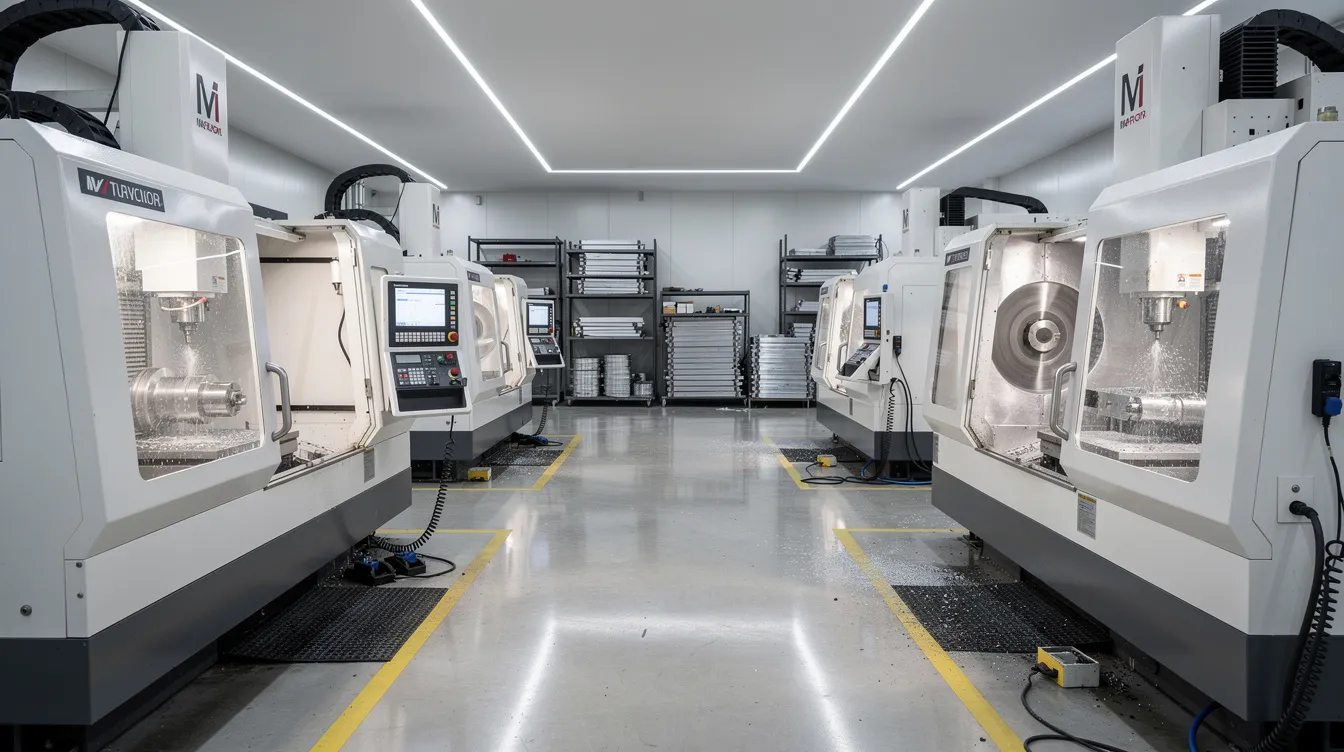
18. CGTMSE Loan for Manufacturing Businesses (Machinery, Factory & Working Capital)
Manufacturing MSMEs are prime candidates for collateral free CGTMSE term loans. Their business needs typically involve high upfront machinery costs but generate predictable, measurable cash flow.
Common use cases:
- CNC machines, injection moulding, printing presses
- Automatic packaging lines, food processing equipment
- Factory building and plant setup
- Working capital for raw material, labour, and inventory
Manufacturing case study: A greenfield engineering unit in 2025–26 sought ₹1.2 crore term loan and ₹40 lakh working capital under CGTMSE. Project cost: ₹2 crore. Promoter margin: 25% (₹50 lakh). The DPR showed capacity to produce 500 units/month with 60% utilization in year one, reaching 85% by year three. DSCR projected at 1.65. Sanction obtained within 6 weeks from a PSU bank.
Checklist for manufacturing borrowers:
- Detailed machinery quotations with specifications
- Plant layout drawing
- Implementation schedule with milestone dates
- Vendor agreements or purchase orders
- Realistic capacity ramp-up plan
- Environmental and pollution clearances
19. CGTMSE Loan for Startups & First-Time Entrepreneurs
In the context of bank lending, a “startup” is an early-stage business, often under 5 years old. Many startups can qualify for CGTMSE-backed collateral free loans if their projections are credible and documentation is solid.
Typical challenges startups face:
- No past financials or limited banking history
- Limited collateral or assets to offer
- High perceived risk by lenders
- Dependence on promoter’s savings
How to overcome these challenges: A strong DPR with evidence-backed market research, detailed financial projections, and realistic assumptions can compensate for the absence of historical data. Credit cards offer instant personal loans against existing credit limits, but for serious business funding, CGTMSE provides a far more structured and sustainable path.
Startup case study: A service-based tech company in 2026 sought ₹55 lakh as a collateral free business loan. The founder, a software engineer with 8 years of industry experience, prepared a DPR showing three signed client contracts worth ₹18 lakh annually. The bank sanctioned ₹50 lakh (term loan ₹35 lakh + working capital ₹15 lakh) with CGTMSE coverage. Key factor: promoter contributed ₹12 lakh as equity and maintained a clean bank account for 18 months prior.
Practical tips for startups:
- Maintain separate business and personal bank accounts from day one
- Obtain all necessary licenses before approaching the bank
- Show skin in the game through promoter contribution
- Build a minimum business vintage of 6–12 months if possible before applying
CGTMSE improves your chances, but it does not guarantee approval for every startup idea.
20. Practical Case Studies: How Collateral Free Loans Work in Real Life
Case 1: Manufacturing Unit – Packaging Business
- Profile: Existing corrugated box manufacturer, 4 years old, Udyam registered
- Requirement: ₹1.8 crore term loan for automatic corrugation plant + ₹30 lakh working capital
- Bank: PSU bank branch with CGTMSE experience
- Outcome: Sanctioned in 5 weeks. DSCR: 1.55. Promoter margin: 22%
- Key factor: Professional DPR with detailed capacity analysis and confirmed buyer orders
Case 2: Service Business – Diagnostic Centre
- Profile: New diagnostic lab in Tier-II city, promoted by experienced pathologist
- Requirement: ₹65 lakh term loan for equipment and interiors
- Outcome: Initially queried due to lack of financial history. After revising DPR with location-based demand study and signed referral agreements with 3 clinics, loan sanctioned within 7 weeks
- Lesson: A revised, well-documented project report can convert a query into approval
Case 3: Business Expansion – Trading Firm
- Profile: 6-year-old wholesale FMCG distributor seeking to expand to new territory
- Requirement: ₹75 lakh cash credit enhancement under CGTMSE
- Outcome: Sanctioned based on strong 3-year financials showing consistent growth, clean banking, and confirmed distribution agreements
- Key factor: CMA data clearly demonstrated peak working capital requirement during festival season
Case 4: Startup – Food Processing
- Profile: First-generation entrepreneur starting a spice grinding and packaging unit
- Requirement: ₹45 lakh composite loan
- Outcome: Sanctioned after promoter brought in 30% margin, obtained FSSAI license, and submitted a DPR with conservative first-year projections
- Lesson: Higher promoter contribution and realistic projections build lender confidence
21. Expert Tips to Improve Approval Chances for CGTMSE Collateral Free Loans
- Check your CIBIL score before approaching any bank – aim for 700+
- Clear all minor overdues and outstanding credit card bills
- Maintain consistent, regular transactions in your business bank account for at least 12 months
- Avoid cheque bounces at all costs – even one bounce raises red flags
- Ensure GST and income tax filings are completely up-to-date
- Prepare a professional DPR tailored to your specific project – avoid generic templates
- Get CMA data prepared in the exact format your target bank uses
- Keep promoter contribution ready (20–25% is ideal for most categories of eligible mses)
- Choose a bank branch with proven CGTMSE experience in your industry
- Meet the branch manager personally – explain your project face-to-face
- For manufacturing projects, include detailed technical write-ups with machinery specs and vendor details
- For service and startup models, attach client contracts, LOIs, or subscription pipeline evidence
- Ensure DSCR exceeds 1.4–1.5 in your projections
- Be completely transparent about existing loans, liabilities, and any past defaults
- Involve a Chartered Accountant or professional consultant early, especially for loans above ₹50 lakh
- Keep all documents organized in a single file – banks respect prepared borrowers
- If rejected, ask for specific reasons, fix them, and re-apply after 3–6 months
22. Frequently Asked Questions on CGTMSE Loan Without Collateral (2026)
Can I get a CGTMSE loan without any collateral in 2026? Yes. Eligible micro and small enterprises can get loans without pledging any collateral security under the CGTMSE scheme. The bank relies on the credit guarantee from the Trust instead.
What is the maximum CGTMSE loan amount? Under the standard scheme, eligible borrowers can apply for loans up to ₹5 crore. Under CGS-I, guarantee coverage extends to ₹10 crore with a hybrid security model for the upper slab.
Is CGTMSE loan interest-free? No. CGTMSE is a guarantee scheme, not a subsidy. Interest rates are determined by the bank and are typically linked to MCLR or EBLR with applicable spreads.
Can a trading firm get CGTMSE coverage? Yes, trading units can qualify subject to scheme guidelines and the specific MLI’s policy. Some banks may restrict or exclude certain types of retail trade.
How long does CGTMSE loan approval take? Typically 2–4 weeks for small loans and 4–8 weeks for larger manufacturing projects, depending on document readiness and bank workload.
Do I need Udyam registration for CGTMSE? Yes. Udyam Registration is mandatory for obtaining CGTMSE guarantee cover. Without it, your application cannot be processed under the scheme.
Can an existing NPA unit be covered? No. Units with existing NPA or wilful default classification are not eligible for CGTMSE coverage.
Is CGTMSE applicable for medium enterprises? Generally, the scheme covers micro and small enterprises. Medium enterprises may be eligible under specific sub-schemes or linked programs.
Can I change my bank after sanction? Typically not. The guarantee is linked to the specific lending institution that sanctioned the loan. Transfer would require fresh processing.
Is personal guarantee of promoter required? CGTMSE guidelines do not require collateral or third party guarantee. However, some banks may ask for a personal guarantee of the promoter as per their internal policies.
Can I apply directly to CGTMSE Trust? No. Borrowers apply to the bank. The bank, after sanctioning the loan, applies to CGTMSE for guarantee cover on behalf of the borrower.
Can self-employed professionals get collateral free business loans under CGTMSE? Yes, if they are operating as an MSME with valid Udyam Registration and meet the eligibility criteria of the scheme and the bank.
What happens if I pre-close the loan? You can pre-close without penalty from CGTMSE. The guarantee fee for remaining tenure is not refunded. Bank-specific pre-closure charges may apply.
Is renewal of working capital limit also covered? Yes. Renewal of existing working capital limits under CGTMSE coverage is permitted, subject to annual review and guarantee fee payment.
What are the typical documents required? KYC, Udyam certificate, GST registration, financials (past and projected), bank statements, DPR, CMA data, machinery quotations, and sector-specific licenses.
Is deposit insurance related to CGTMSE? No. Deposit insurance and credit guarantee serve different purposes. CGTMSE provides credit guarantee for business loans to MSMEs, not insurance on bank deposits. The Credit Guarantee Corporation and deposit insurance functions are separate.
23. Conclusion: Collateral Free Business Loans Need Strong Preparation
The CGTMSE scheme enables MSMEs and startups across India to access institutional finance without pledging property or assets. With guarantee coverage now extending up to ₹10 crore under CGS-I, 2026 is among the most favourable times for MSME growth supported by the central government and banking system.
But a loan without collateral does not mean a loan without responsibility. Repayment discipline is crucial for long-term creditworthiness and financial stability. Every EMI paid on time strengthens your profile for future, larger funds.
Key takeaways:
- CGTMSE allows collateral free loans up to ₹5 crore (₹10 crore under CGS-I)
- Success depends on project viability, documentation quality, and promoter track record
- A strong project report and accurate CMA data are as important as the business idea itself
- Plan your funding early, maintain clean financial records, and treat your bank as a long-term partner
The scheme plays a vital role in helping small businesses expand, generate employees, and contribute to India’s economic growth. Prepare thoroughly, and the path to collateral free funding becomes significantly smoother.
About the Author
CA Manish Gugliya is a practicing Chartered Accountant with nearly two decades of hands-on experience in project finance, MSME advisory, startup consulting, business valuation, financial modeling, CMA data preparation, and bank loan documentation.
He is the founder of ProjectReportBank.com, a specialized platform that helps entrepreneurs obtain professionally prepared project reports, detailed project reports (DPRs), CMA reports, feasibility studies, TEV studies, business plans, and financial projections for bank loans and investment purposes.
His areas of expertise include:
- Project reports for manufacturing and service MSMEs
- CMA data preparation aligned with PSU and private bank formats
- Startup consulting and financial modeling
- MSME and CGTMSE advisory across sectors
- Business valuation and investment feasibility analysis
With practical experience working alongside public sector banks, private banks, and NBFCs on MSME and collateral free loan proposals across industries in India, CA Manish Gugliya brings a rare combination of technical knowledge and ground-level lending insight.
Need a Project Report for CGTMSE Loan?
A professionally prepared project report, CMA data, and financial projections can dramatically improve your chances of approval for a collateral free business loan under CGTMSE.
What to look for in professional documentation:
- Detailed DPR aligned with specific bank norms and appraisal formats
- 5–7 year financial projections with DSCR analysis
- Realistic working capital assessment and MPBF computation
- Risk analysis with sensitivity scenarios
- Clear assumptions supported by market data
Well-structured documentation saves time during bank appraisal, reduces follow-up queries, and presents your business as credible and investment-worthy. For borrowers seeking funds through CGTMSE, the quality of the DPR and CMA often determines whether the application crosses the finish line.
ProjectReportBank.com supports MSMEs, manufacturers, and startups across India with bank-ready project reports, CMA data in standard bank formats, financial projections with DSCR analysis, and business plans for both lenders and investors.
Before you submit your CGTMSE loan application, get your DPR and CMA reviewed by a professional to avoid costly delays or rejections.